

Sociology and Anthropology Department

The Sociology and Anthropology Department researches diverse human arrangements using incisive theory and rigorous social scientific methods to question insightfully, investigate carefully, and act purposefully.
One way to understand people and groups is to focus on the stories they tell. Humans construct meanings, identities, and narratives to explain the world and to give accounts of themselves.
Another way to understand people and groups is to see them from a bird’s-eye view, watching what they do and looking at the patterns that emerge from their actions. Analyzing human behavior often reveals structures and outcomes that are neither intentional nor perceptible to actors on the ground.
Anthropology and sociology are special because of the ways they combine these perspectives. We are attentive to stories and to the larger patterns that emerge in human behavior, and we approach them both humanistically and scientifically.
We use qualitative methods such as archival research, interviews, and participant observation to understand the worlds of meaning that people construct and inhabit.
We use quantitative methods to document, explore, and test hypotheses about the larger patterns that emerge from people’s actions.
These “mixed methods” inform each other as we learn about social arrangements, whether we are studying a historic village, a contemporary small-scale community, a social movement, a professional organization, or society-wide social and economic mobility.
Our methods complement incisive theories that allow us to pinpoint who the relevant actors are in any social setting and the mechanisms through which their actions combine to produce social structures, as well as how those structures shape people’s subsequent actions.
These theoretical and methodological tools are, we believe, essential for doing good social science, which, like all science, should serve the public interest by providing a reliable basis for policy decisions. They also facilitate our understanding of the aspirations, beliefs, and values that people perceive as motivating their decisions and actions. These skills are equally valuable in other vocational and life pursuits and are widely used in fields like consulting, nonprofit management, research, government, health care, law, and business.
SOAN at W&L is a community of faculty, students, and alumni who are committed to learning and practicing these skills. We work together to question insightfully and investigate carefully so that we can act purposefully as community members and in our personal and professional lives.
Student Outcomes


Danika Brockman '21
"My SOAN classes taught me about the process of statistical research, the theory surrounding it and the practice of such research."

Kara Lough '20
"I am able to excel with client relations and marketing because I can understand relationships and societal influences."


Julia Hernandez '20
"I truly believe that the SOAN major provides students with such a unique interdisciplinary education that can be translated across many different professions and jobs. Not to mention, the SOAN Department and professors are incredibly supportive and helpful!"

Bo Garfinkel '21
"I am a better law student because of the unique perspective that I have in being able to analyze the intersection of law, society and culture.

Feature Stories
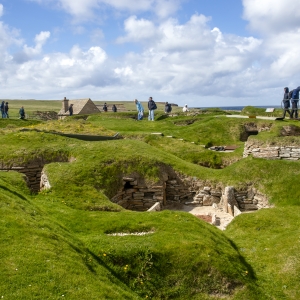
Three new Spring Term Abroad courses allow the liberal arts ethos to shine as professors in different disciplines combine forces.
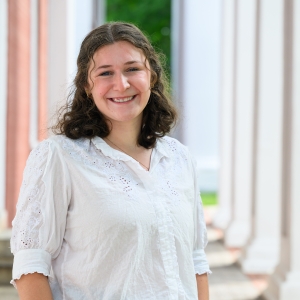
Dyer is looking forward to gaining classroom experience in France before pursuing a career in education policy.
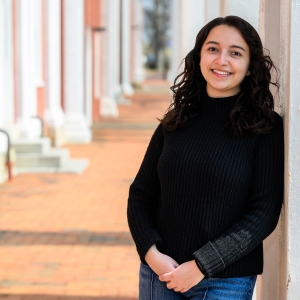
�lvarez looks forward to immersing herself in a different culture with the Fulbright English Teaching Assistantship and will attend W&L Law when she returns, with plans to become an immigration lawyer.
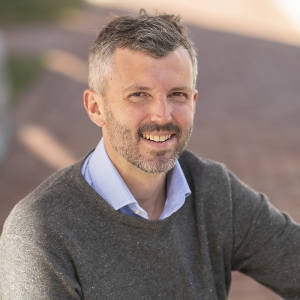
The professor of sociology and anthropology and W&L alum explore building computational literacy into sociological curricula.
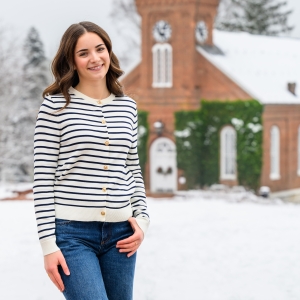
Giannoula, an international student from Greece, said W&L’s genuine community drew her in.
The William P. Ames Jr. Professor of Sociology will discuss this year’s Nobel Peace Prize winner on March 10 in Leyburn Library.
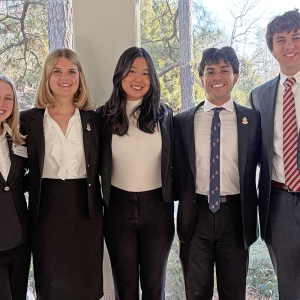
The W&L Ethics Bowl team recently participated in an annual statewide competition.
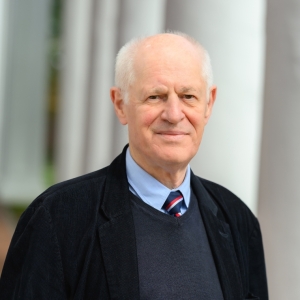
The William P. Ames Jr. Professor of Sociology and Anthropology Emeritus’ chapter focuses on the collapse of the communist system in Eastern Europe.
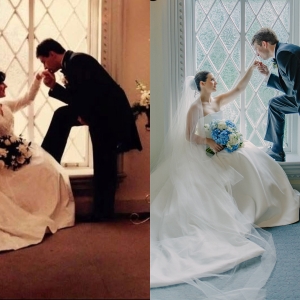
Thirty years apart, a W&L love story continues.
Eastwood’s talk, titled “Reflections on the Sociology of Cynicism and Distrust,� will be held Feb. 19 in Northen Auditorium.
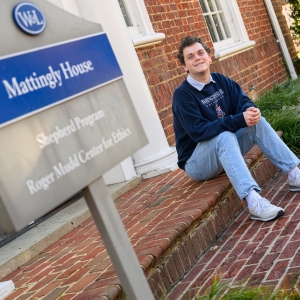
Ward has found his ‘home’ on campus with the Shepherd Program.
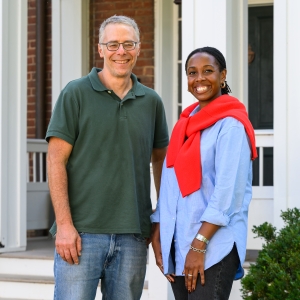
Marsh will work with Nature Camp in Vesuvius, Virginia, and Jones will collaborate with the Legal Aid Justice Center for the 25th Judicial District.